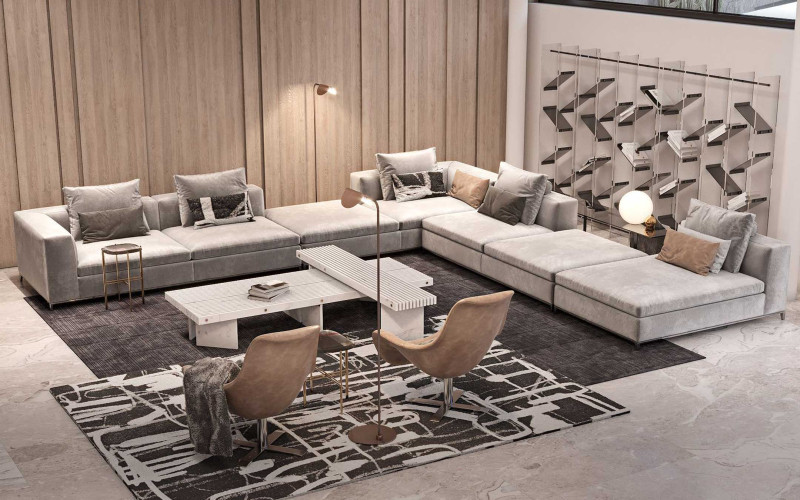

Design trends are circling back in 2026—but with more comfort, texture, and personality than the last time around. Instead of stark, show-home minimalism, homeowners and renters alike are leaning into spaces that feel warm, lived-in, and restorative. Here are eight returning looks designers are excited about, plus practical ways to try each one without overcommitting.
1) Earthy, warm minimalism
Minimalism is returning with a softer edge. Think fewer items overall, but better ones—layered with natural texture and colors that feel grounded rather than icy.
- Try it with color: swap cool whites and grays for beige, muted greens, earthy reds, and deep browns.
- Add texture: mix linen, wool, matte ceramics, and natural wood to keep “minimal” from feeling flat.
- Edit with intention: keep surfaces clearer, but display a few personal pieces that make the room feel lived-in.
2) Wood paneling (the modern version)
Wood is back, but not in the cheap, dated way many people remember. Today’s paneling is architectural: fluting, tongue-and-groove ceilings, and stained wood accents that add depth and warmth.
- Low-commitment option: bring in wood through a coffee table, shelving, or a vintage wood lamp base.
- Medium step: add a wood slat feature wall in an entry, dining nook, or behind a bed.
- Big impact: consider wood on ceilings or around a fireplace to “wrap” the room in warmth.
3) Statement lighting as functional art
Lighting is moving beyond “just practical.” Sculptural fixtures—pendants, oversized shades, or uniquely shaped pieces—are being used as a focal point that anchors the whole room.
- Start small: swap a basic table lamp for one with an interesting silhouette or material (ceramic, linen, rattan).
- Go bold overhead: choose a pendant or chandelier that feels like a centerpiece, even in a neutral color.
- Use warm bulbs: the right temperature makes everything (including neutrals) feel more inviting.
4) Playful patterns
Patterns are returning to add depth and energy—especially classics like stripes and checkerboard, refreshed with unexpected colors or materials.
- Dip a toe in: add pattern with a pillow, pouf, or throw rather than a whole room.
- Balance matters: pair a bold pattern with simpler solids so the space stays calm, not chaotic.
- Try tone-on-tone: subtle pattern in similar shades can feel elevated while still adding interest.
5) Curves and soft forms
Rounded furniture and wavy details are coming back because they make rooms feel approachable and human—an antidote to harsh lines and overly “perfect” spaces.
- Easy swap: choose a round mirror, oval coffee table, or curved floor lamp.
- Comfort upgrade: look for sofas and chairs with softer arms and rounded backs.
- Finish with texture: plaster-like surfaces, handcrafted pottery, and imperfect edges add cozy character.
6) Natural materials and tactile textures
Stone, clay, rattan, linen, and richly grained woods continue to rise because they bring warmth and a sense of calm. In a glossy, screen-heavy world, tactile materials feel grounding.
- Small changes: linen hand towels, a stone tray, a clay vase, or a woven basket.
- Room-defining elements: a stone sink, clay tile, or wood beams (real or boxed-in) for depth.
- Don’t forget greenery: plants add texture and life in a way décor can’t.
7) Wallpaper in bolder placements
Wallpaper is gaining momentum again because it adds mood fast—often more dramatically than paint. It’s also showing up in more surprising spots than the usual four walls.
- Begin with one surface: a feature wall, the back of a bookcase, or a closet interior.
- Think small rooms: powder rooms and entryways are ideal for pattern because the commitment feels contained.
- Look up: ceilings are becoming a popular place for wallpaper when you want a “wow” moment.
8) Modern nostalgia (mixing old and new)
Perfectly matched sets are losing appeal. In their place: layered rooms that feel collected over time, blending vintage or antique pieces with clean-lined modern furniture.
- Start with one vintage anchor: an armoire, sideboard, or coffee table can set the tone.
- Mix finishes on purpose: warm metals, aged wood, and modern upholstery can coexist when the palette is consistent.
- Show your story: art, books, and heirlooms make a home feel personal rather than copied.
Practical takeaway: Pick one “comeback” to try first—like a sculptural light, a curved mirror, or a small wallpaper moment—then build around it with warm neutrals and natural textures for an easy 2026-ready update.